Rain Delays Grip Rio de Janeiro SFs: How Inclement Weather Affects Tennis Tournaments
February 23, 2026
Rain Delays Grip Rio de Janeiro SFs: How Inclement Weather Affects Tennis Tournaments
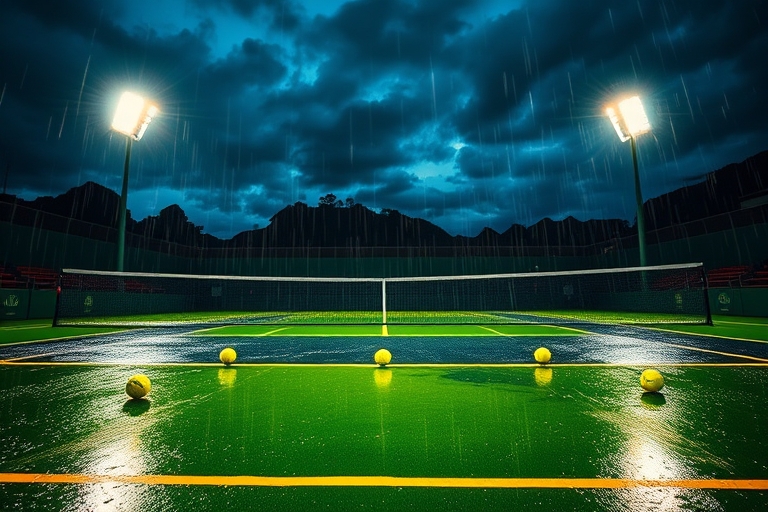
Rainfall frequency in Rio de Janeiro is no stranger to the city's residents, but for tennis enthusiasts, it can be a major headache. The recent rain delays at the Rio Open have left players, coaches, and fans wondering how these conditions impact the tournament's outcome. In this article, we'll delve into the effects of rain delays on player performance, tournament strategy, and the consequences for seeding and scheduling.
Delays and Disruptions
Rio de Janeiro's tropical climate means that rain showers are a regular occurrence, especially during the summer months. However, for tennis players, this can be a major disruption to their preparation and mental state. Players often spend hours on the court, fine-tuning their serves, volleys, and returns. Rain delays can throw a wrench in their carefully crafted plans, leaving them feeling frustrated and unprepared.
- Rain delays can lead to a loss of focus and momentum for players, making it challenging to regain their rhythm and confidence.
- Players may struggle to adjust to the changing conditions, leading to errors and unforced mistakes.
- The constant uncertainty of when play will resume can be mentally taxing, affecting players' ability to stay focused and composed.
The consequences for tournament scheduling and seeding are also significant. With rain delays, matches may be pushed to later in the day or even rescheduled for the next day, disrupting the original seeding and potentially altering the tournament's dynamics.
The Effect on Player Performance
Rain delays can significantly impact a player's serve and volley strategies. The slippery court surface and reduced visibility can make it challenging to execute precise shots and maintain control. Players may need to adjust their tactics to compensate for the conditions, which can be a challenge.
- Serve and volley strategies: Players may opt for safer, more controlled shots, sacrificing power and precision for consistency and accuracy.
- Physical and mental endurance: Rain-affected conditions can be physically demanding, requiring players to expend more energy to compensate for the slippery surface and reduced visibility.
- Examples of top players' performances under rain-affected conditions:
- Novak Djokovic's victory over Rafael Nadal in the 2019 Australian Open final, where he adapted his game to the wet conditions and came out on top.
- Serena Williams' dominance in the 2019 US Open, where she adjusted her serve and volley strategy to account for the rain-affected conditions and won the title.
Tournament Strategy and Adjustments
Tournament organizers and players have developed strategies to cope with rain delays and disruptions. These include:
- Changing scheduling and format: Tournaments may adjust the schedule to accommodate rain delays, potentially pushing matches to later in the day or rescheduling them for the next day.
- Player adaptability and flexibility: Players must be prepared to adjust their tactics and strategies to account for the changing conditions.
- Coaching and support team strategies: Coaches and support teams work closely with players to develop strategies for coping with rain-affected conditions, including adjustments to serve and volley tactics and mental preparation techniques.
In conclusion, rain delays can have a significant impact on tennis tournaments, affecting player performance, tournament strategy, and seeding. While players, coaches, and organizers have developed strategies to cope with these disruptions, the ever-changing conditions can still pose a challenge. As the Rio Open and other tennis tournaments navigate the unpredictable weather, one thing is certain: the players who adapt and adjust their game will be the ones to thrive in the face of adversity.