Surface Savvy: Mastering the Art of Adaptation on Different Courts
February 28, 2026
Surface Savvy: Mastering the Art of Adaptation on Different Courts
As a tennis player, you've likely experienced the thrill of competing on various surfaces – the slow and challenging clay courts of Paris, the lightning-fast grass courts of Wimbledon, and the medium-paced hard courts of the US Open. Each surface presents a unique set of challenges that require a distinct set of skills and strategies to master. In this article, we'll delve into the characteristics of each surface, provide tips on adapting your footwork and movement, tweak your stroke technique, and offer guidance on mental preparation and strategy.
Understanding the Characteristics of Each Surface
Before we dive into the details of adapting to each surface, it's essential to understand the unique characteristics of each. Here's a brief overview:
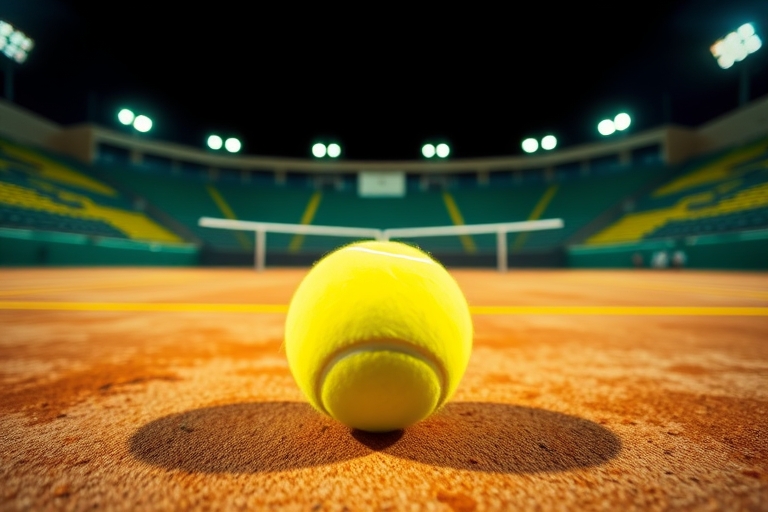
- Clay courts: These courts are notorious for their slow and high-bouncing surface, which produces a lot of spin. Players need to be prepared for the ball to bounce high and deep, making it crucial to develop strong footwork and hand-eye coordination.
- Grass courts: Grass courts are the fastest and most demanding of all, with a low-bouncing surface that rewards aggressive play. Players need to be quick on their feet and able to generate plenty of power to take advantage of the short, fast bounces.
- Hard courts: Hard courts fall somewhere in between clay and grass in terms of speed and bounce, offering a medium-paced surface with moderate spin. Players need to be versatile and adaptable to succeed on this surface.
Adapting Your Footwork and Movement
To master each surface, you need to adjust your footwork and movement to account for the unique characteristics of each court. Here are some tips to get you started:
- Quickly adjusting to the speed and bounce: The key to adapting to each surface is to quickly adjust your footwork to match the speed and bounce of the ball. On clay courts, you'll need to be patient and allow the ball to bounce high, while on grass courts, you'll need to be aggressive and take the ball early.
- Changing footwork patterns: Each surface requires a distinct footwork pattern. On clay courts, you'll need to take smaller, more precise steps, while on grass courts, you'll need to take longer, more powerful strides.
- Developing the ability to read the ball and anticipate its movement: To succeed on each surface, you need to develop the ability to read the ball and anticipate its movement. This requires a combination of experience, intuition, and practice.
Tweaking Your Stroke Technique
In addition to adapting your footwork and movement, you'll also need to tweak your stroke technique to suit each surface. Here are some tips to get you started:
- Adjusting racquet head speed and swing angle: The key to adapting your stroke technique is to adjust your racquet head speed and swing angle to suit the surface. On clay courts, you'll need to use a slower, more controlled swing, while on grass courts, you'll need to use a faster, more powerful swing.
- Compensating for the increased or decreased spin and bounce: Each surface produces a unique amount of spin and bounce, which requires you to adjust your stroke technique accordingly. On clay courts, you'll need to compensate for the high spin and bounce by using a more topspin-heavy stroke, while on grass courts, you'll need to use a more underspin-heavy stroke to counter the low bounce.
- Developing a consistent and adaptable stroke production: To succeed on each surface, you need to develop a consistent and adaptable stroke production. This requires a combination of practice, patience, and experience.
Mental Preparation and Strategy
Finally, mental preparation and strategy play a crucial role in adapting to each surface. Here are some tips to get you started:
- Developing a pre-match routine: A pre-match routine can help you prepare for the unique challenges of each surface. This might include visualization exercises, stretching, and mental preparation techniques.
- Adapting your game plan to the surface and your opponent's style: Each surface and opponent requires a unique game plan. On clay courts, you may need to focus on wearing down your opponent with long, drawn-out rallies, while on grass courts, you may need to focus on taking the ball early and being aggressive.
- Mental toughness and focus: Mental toughness and focus are essential for adapting to the ever-changing conditions on each surface. You need to be able to stay focused and composed under pressure, even when the conditions are challenging.
In conclusion, mastering the art of adaptation on different surfaces requires a combination of technical skill, mental preparation, and strategy. By understanding the unique characteristics of each surface, adapting your footwork and movement, tweaking your stroke technique, and developing a consistent and adaptable stroke production, you'll be well on your way to becoming a surface-savvy player. Remember to stay focused, patient, and adaptable, and you'll be able to conquer any surface that comes your way.